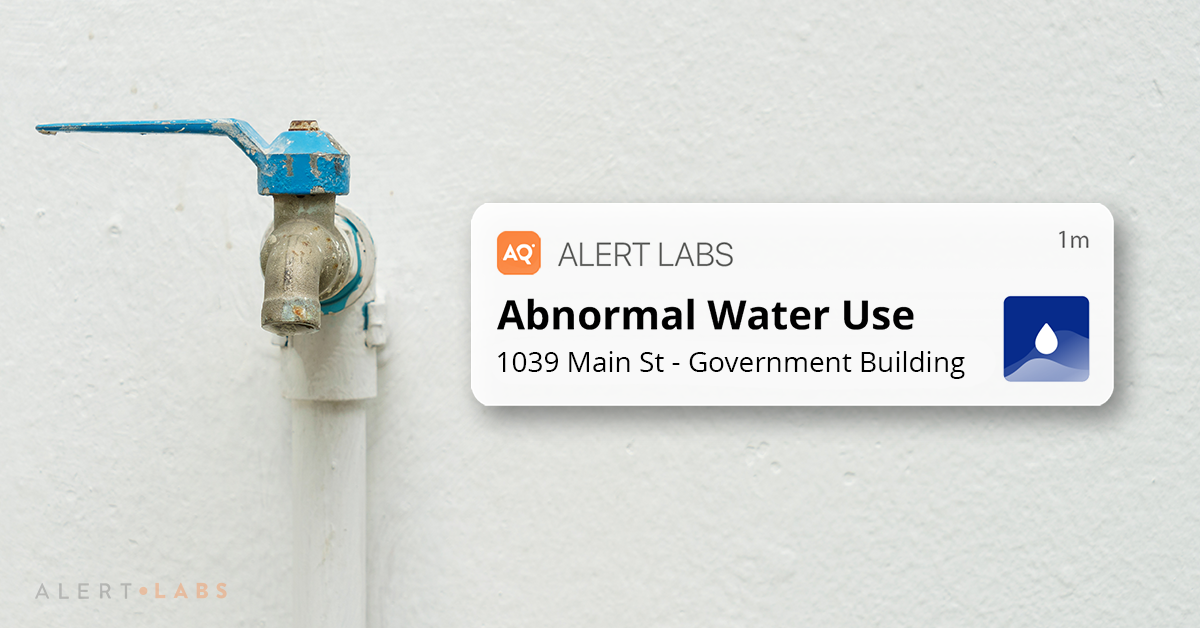
Enterprise Leak Detection: What Facility Management Must Require at Portfolio Scale

Most water leak detection “systems” don’t fail because the sensor didn’t detect water.
They fail because the leak detection program wasn’t designed to operate at portfolio scale — across different building types, different teams, and real-world command center workflows.
And when a leak gets missed, or a response breaks down, it’s not the vendor who gets blamed. It’s the facility management team that approved the rollout.
Here’s the rule enterprise IFMs learn the hard way:
If it doesn’t work for the command center, it doesn’t work.
This article breaks down the 7 enterprise requirements every integrated facility management provider should use when evaluating leak detection for multi-site portfolios — especially if you’re shopping right now because something failed.
The difference between a leak detection “product” and an enterprise-ready leak detection program
A leak detection product can look great in a pilot.
A handful of sensors go in. A few alerts come through. Everyone feels better.
But enterprise facility management isn’t a pilot environment. It’s a constant operating model. And leak detection becomes a program the moment it has to work across:
- dozens or hundreds of buildings
- multiple regions
- different site conditions
- different teams and response workflows
- real accountability when something goes wrong
At portfolio scale, the most important question isn’t “Does it detect water?”
It’s:
Does this system consistently prevent damage across our portfolio, without creating operational chaos?
(Read the article: Residential Water Leak Detectors vs Commercial Leak Detection)
The 7 enterprise requirements of a leak detection program at portfolio scale
Here's a practical framework IFM command center leaders can use to evaluate whether a solution is truly enterprise-ready.

1) Scalability
Most leak detection solutions are designed for single-building deployments.
They can work well in one site… and fall apart when you try to replicate them across 25, 50, or 500 buildings.
Enterprise scalability means more than “you can buy more devices.” It means the program supports:
- consistent deployments across different building types
- centralized visibility across the portfolio
- standardized configuration and alerting
- repeatable rollout processes that don’t depend on one “hero technician”
- the ability to expand without your support burden multiplying
At portfolio scale, the failure mode isn’t usually “the sensor didn’t work.”
It’s: the rollout becomes inconsistent, unmanageable, and impossible to govern.

2) Shut-off strategy (human-in-the-loop)
Shut-off valves can be a powerful part of water damage prevention.
But at enterprise scale, shut-off cannot be treated like a simple “automation feature.”
Different buildings and zones have different operational consequences. Shutting off water in the wrong place can cause:
- tenant disruption
- operational downtime
- safety concerns
- damage to equipment
- emergency service calls
That’s why enterprise-ready leak detection programs treat shut-off as a strategy, not a gimmick.
A scalable shut-off strategy includes:
- zone-based control (not one-size-fits-all)
- the ability to shut off water remotely or on a schedule
- shut-off triggered by unusual water flow
- shut-off triggered by physical presence of water
- clear linkage between detection zones and shut-off points
- human-in-the-loop decisioning, where the command center can confirm and take action intentionally
The goal isn’t “automatic shut-off at all costs.”
The goal is: reduce damage without creating new operational risks.
Check out the article 4 Water Shut-Off Strategies for Commercial Buildings

3) Operational reliability
In enterprise facility management, leak detection program reliability has two meanings:
- It catches leaks that matter
- It doesn’t create noise that burns out your team
Missed leaks are catastrophic. Too many alerts are corrosive.
A leak detection program needs to reliably detect both:
- fast events (burst pipes, supply line failures)
- slow events (pinhole leaks, intermittent leaks, slow drips that become mold and remediation)
It also needs to remain reliable in real-world commercial conditions:
- mechanical rooms
- remote areas
- low-traffic zones
- spaces that aren’t checked daily
- power or internet outages
In other words: not just “does it work,” but does it keep working in the places leaks actually happen?

4) Command center readiness
This is the enterprise line in the sand.
Leak detection is not just about detection. It’s about response.
If the system generates alerts but doesn’t support a clean command center workflow, it becomes one more tool that someone has to babysit — and eventually, it gets ignored.
A command-center-ready program supports:
- centralized monitoring across sites
- clear alert routing (who gets notified and when)
- escalation paths when the first response doesn’t happen
- time delays that reduce nuisance events without hiding real leaks
- logging that allows teams to review what happened and improve response
Enterprise IFMs don’t need more dashboards.
They need systems that translate events into action — consistently, at scale.
Again:
If it doesn’t work for the command center, it doesn’t work.

5) Integration into existing workflows
At portfolio scale, leak detection cannot be a standalone island.
If it lives in a separate platform that doesn’t connect into how work gets done, it becomes shelfware — even if the hardware is solid.
An enterprise-ready program supports integration into existing workflows such as:
- command center triage
- resolution tracking
- portfolio-level reporting and auditing
Enterprise-ready leak detection programs support practical, real-world integration, whether that means using API-based workflows, pushing events into command-center systems, syncing with ticketing tools, or feeding portfolio-level BI dashboards.
The goal isn’t complex architecture or a giant smart building overhaul; it’s making sure leak events can be operationalized and land where work actually gets done.

6) Deployment standardization
This is where many leak detection rollouts fail — even when the technology is good.
At portfolio scale, installation quality and documentation are part of the system.
A leak detection program must support repeatable deployment through:
- site audits (using standardized templates)
- validation of floor plans and high-risk assets
- consistent placement rules (to avoid nuisance trips, protect devices, and ensure coverage)
- clear labeling and mapping of devices
- commissioning processes that confirm performance
- post-install documentation (including maps, device IDs, photos, and zones)
This matters because missed leaks often happen due to coverage gaps, not because the device failed.
And scaling chaos often happens because installations aren’t consistent across regions.
If the deployment process isn’t standardized, the portfolio will never behave like a portfolio.
It will behave like 200 separate experiments.

7) Support and long-term operability
Enterprise facility management doesn’t end after installation.
That’s where the real work begins.
Many solutions perform well in the first few months and degrade over time due to:
- inconsistent maintenance
- battery blind spots
- device health issues
- lack of remote diagnostics
- slow support response
- firmware and platform updates not supported
At portfolio scale, support isn’t a nice-to-have. It’s an operational requirement.
A truly enterprise-ready leak detection program supports long-term operability through:
- proactive device health monitoring
- remote configuration and upgrades
- fast diagnostics and troubleshooting
- consistent support as deployments grow
- reporting that helps teams improve response over time
Because the real enterprise risk isn’t just a leak.
It’s being blamed for deploying a system that didn’t hold up when it mattered.
A practical way to use these enterprise requirements when evaluating vendors
If you’re evaluating vendors right now — especially after a failure — use these requirements in a simple way:
- Bring them into every vendor conversation
- Ask vendors to demonstrate how their system works across multiple buildings, not one
- Request proof of real portfolio deployments
- Test the workflow with your command center team, not just the site staff
- Validate how deployments are standardized and supported over time
A pilot can tell you if a product works.
But only an enterprise evaluation tells you whether the program will still work after 50 buildings.
If you’re evaluating enterprise leak detection for a multi-site portfolio…
Alert Labs is purpose-built for enterprise leak detection programs — especially for IFMs managing large portfolios with command center operations, receiving the 2025 BGIS Innovation Supplier Award.
Alert Labs solutions are deployed across 14,000 buildings, have helped conserve 15 billion gallons of water, and have helped prevent over $150 million in water damage.